
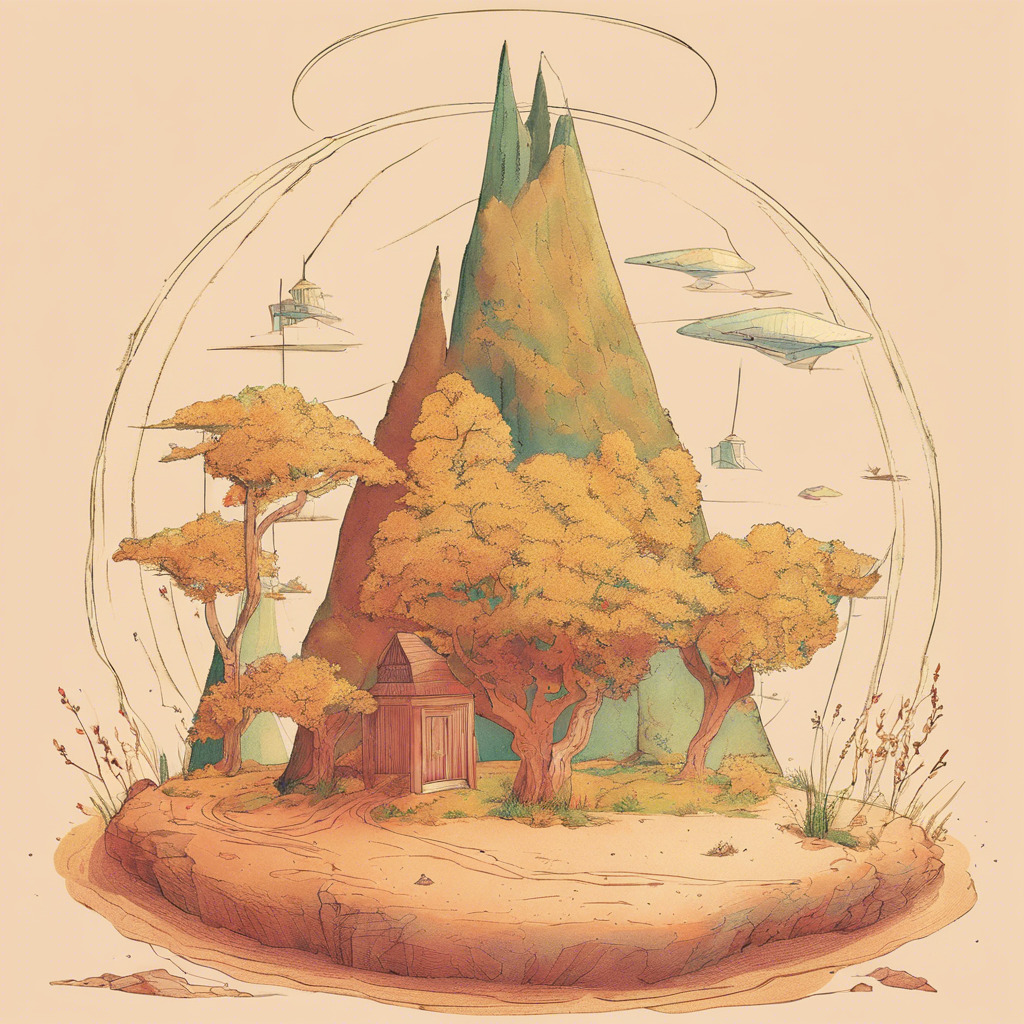
The concept of other worlds has always been a fascinating topic for human beings. From science fiction novels to movies, the idea of parallel universes or alternate dimensions where different realities exist has captured our imaginations and sparked endless discussions.
In many cultures and belief systems, the existence of other worlds is not just a fantasy, but a deeply held belief. Whether it’s the idea of heaven and hell in Christianity, the realm of spirits and ancestors in indigenous cultures, or the concept of multiple planes of existence in Hinduism, the notion of other worlds is a common thread that runs through diverse belief systems.
But even in the realm of science, the idea of other worlds is not dismissed as mere fiction. Theoretical physicists and cosmologists have proposed the existence of parallel universes, where different laws of physics may govern reality, or alternate timelines where different choices lead to different outcomes.
One of the most intriguing theories about other worlds is the concept of the multiverse, where an infinite number of universes exist simultaneously, each with its own set of physical laws and possibilities. In this view, our universe is just one of many, and there may be countless other worlds out there, waiting to be discovered.
The idea of other worlds challenges our understanding of reality and forces us to question our place in the cosmos. It invites us to consider the possibility of different ways of being, different versions of ourselves, and different paths that our lives could have taken.
Whether we view other worlds as a product of our imagination, a reflection of our deepest beliefs, or a scientific hypothesis, one thing is clear: the concept of other worlds will continue to captivate us and inspire us to explore the vast unknown possibilities that lie beyond our own reality.
 Liz Zemlicka